

{{item.Subject}}
New Car Review
Learn about events, happenings and more
Can the king of the hybrid also win at the plug-in hybrid?
Friday, 16 October 2026 | James Coleman
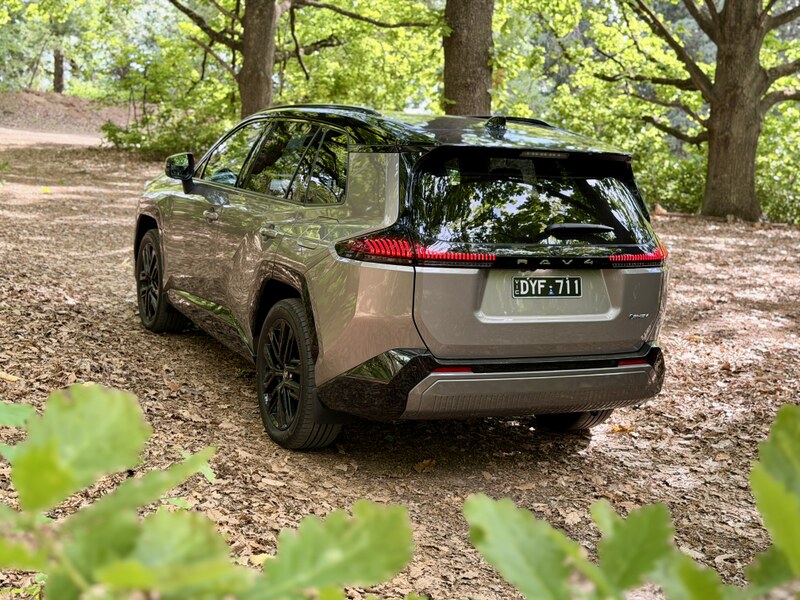
It's happening alarmingly often nowadays.
Maybe I'm just maturing, but I'm emerging from most new Toyota models actually thinking about how nice the drive was. Tight handling, precise steering, a Sport mode that does more than simply let the engine rev higher, and smooth, predictable responses from the accelerator and brakes. It even happened in a Camry about a year ago.
But this time, it's even more impressive. Because it's a plug-in hybrid. Toyota's first for Australia, in fact.
And the driving wasn't the only thing that left a good impression.
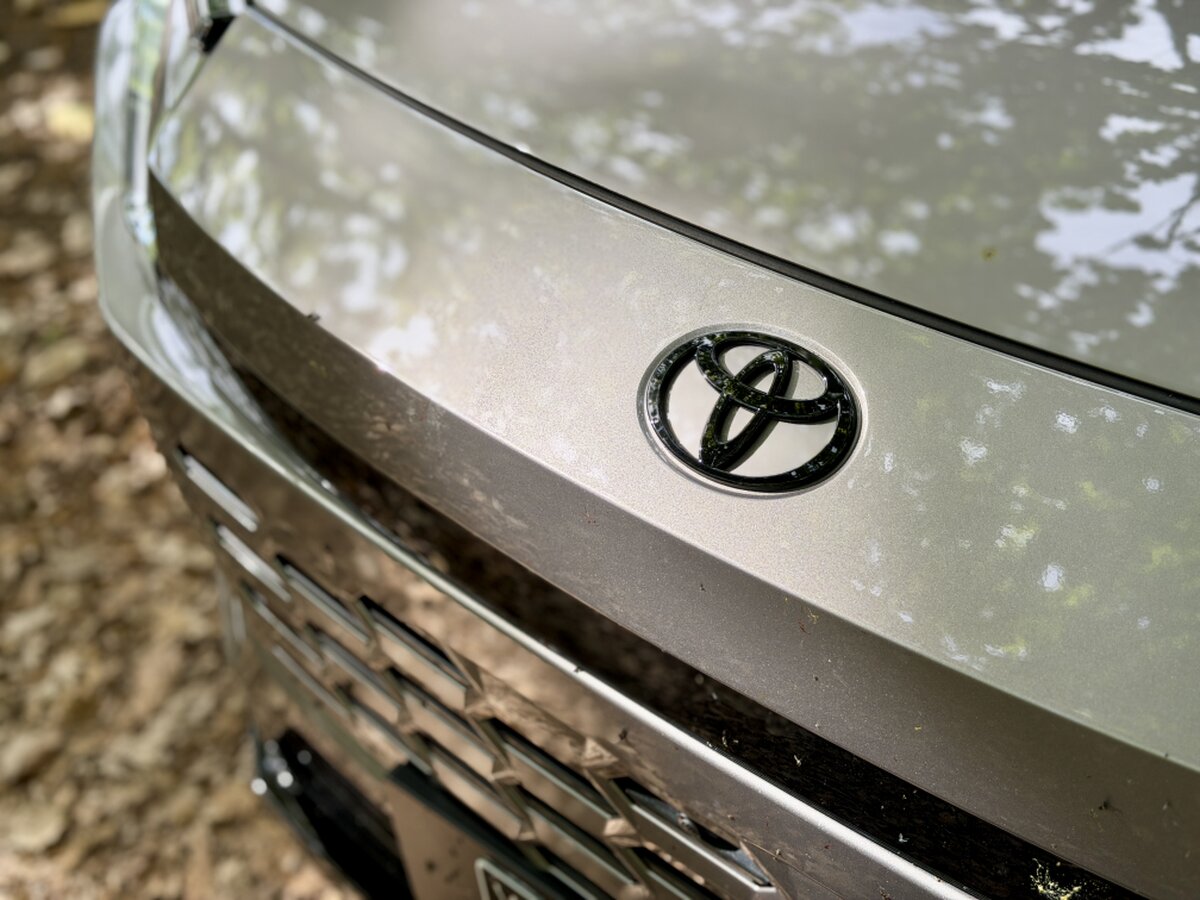
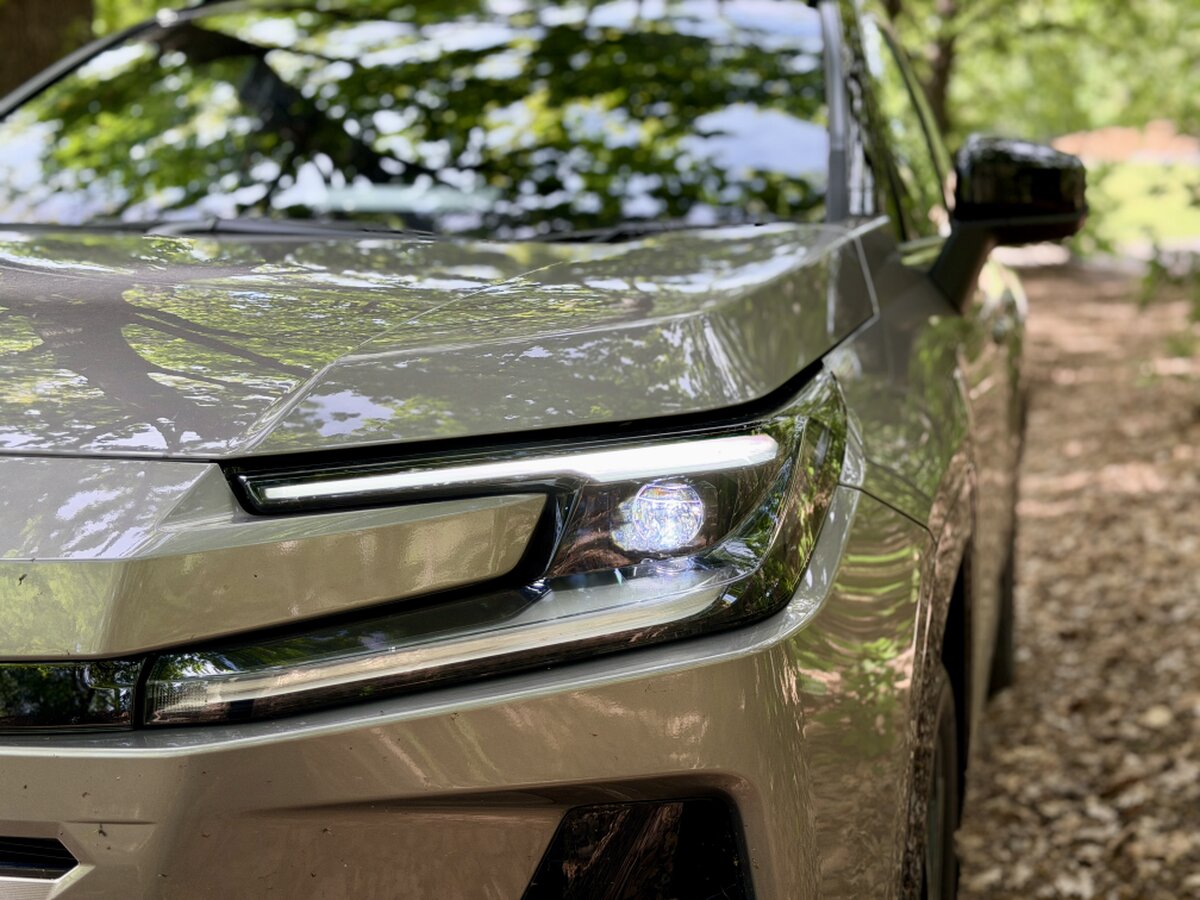
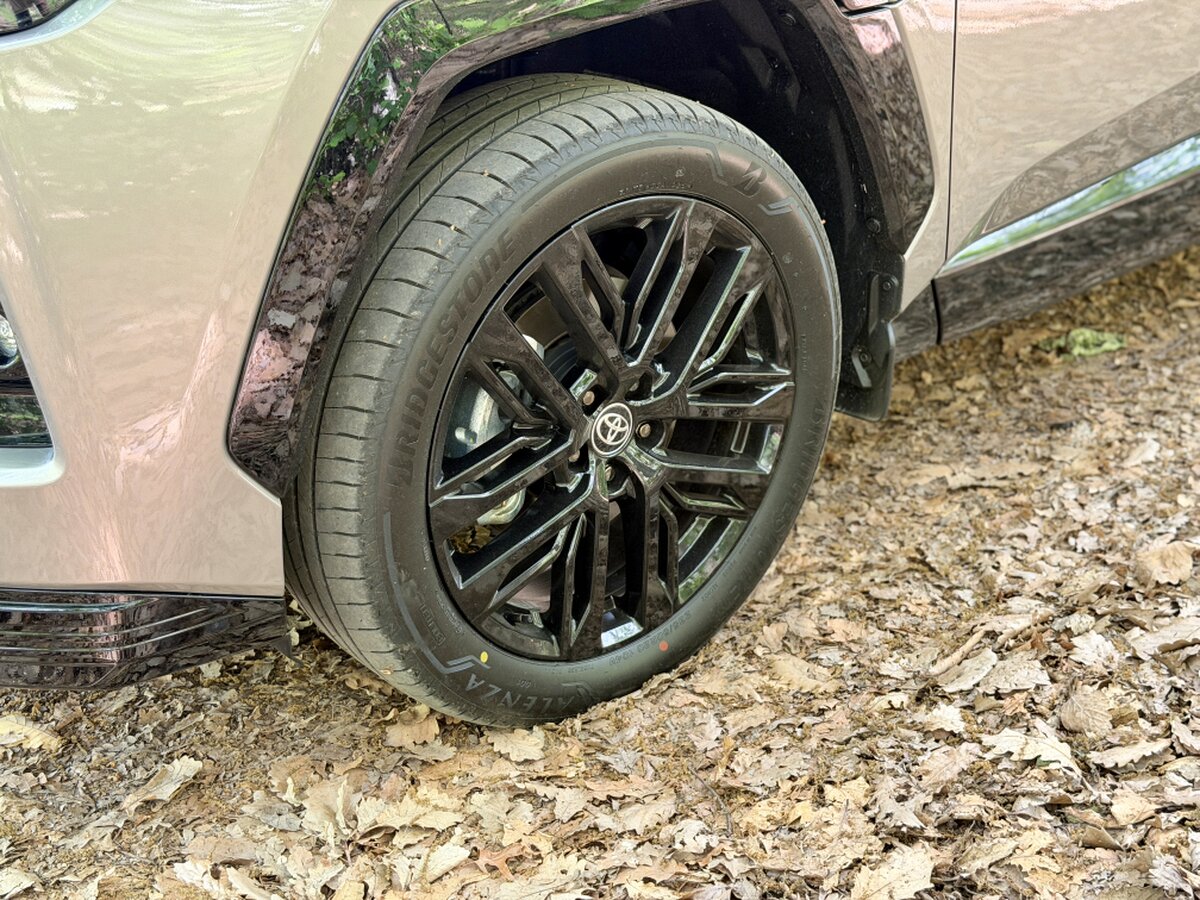
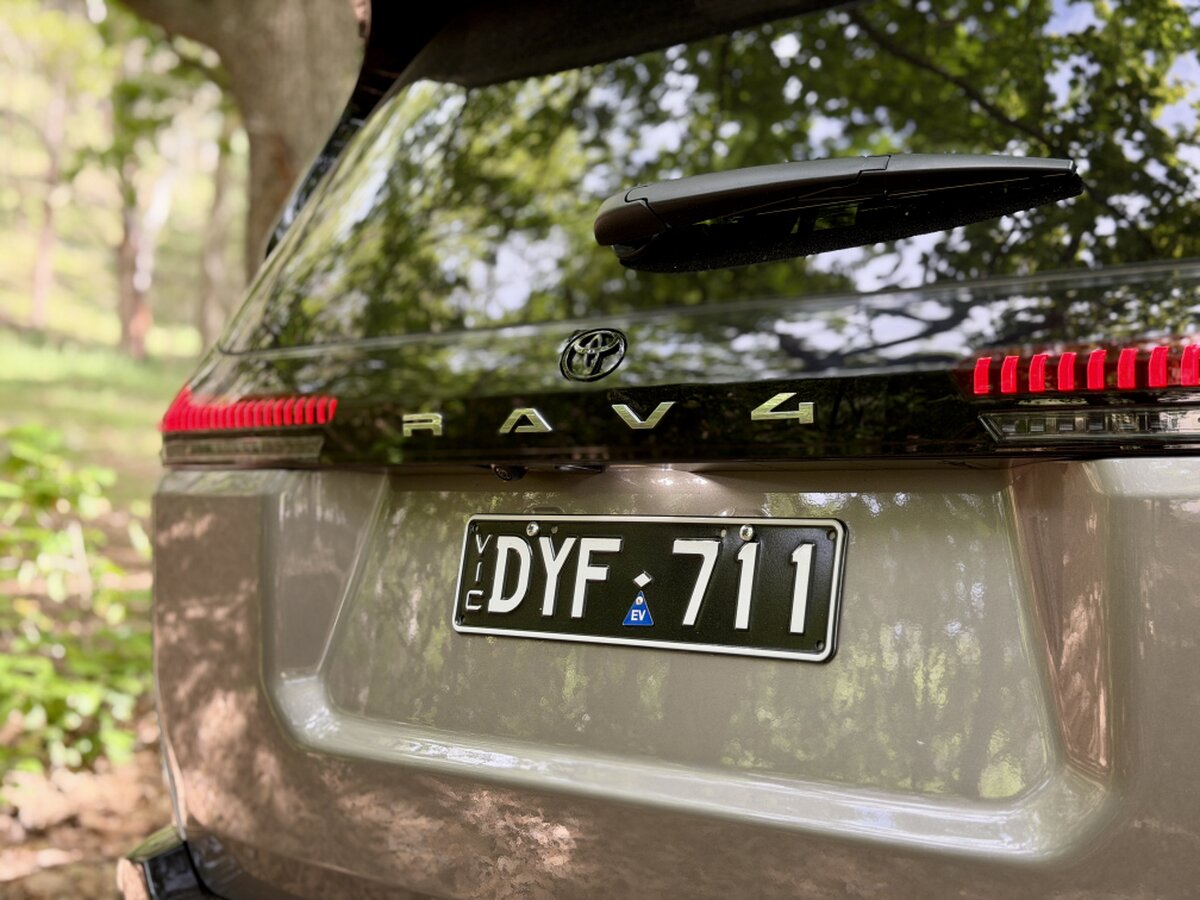
Swipe or scroll sideways · 7 images
What is it?
Much like with electric cars, Toyota has been in no great hurry to move beyond conventional hybrids to plug-in hybrids.
They've been available overseas for years in both the Prius and RAV4, but finally, some 12 years after Mitsubishi introduced the Outlander PHEV to Australia, a plug-in version of the RAV4 has arrived.
There are three models for now, all towards the top of the range: the XSE in front-wheel-drive and all-wheel-drive forms, priced at $58,840 and $63,340 respectively, and the GR Sport AWD from $66,340.
All use a 2.5-litre petrol engine, electric motors and a 22.7kWh battery. Leather upholstery, heated front seats and Toyota's new infotainment system are standard.
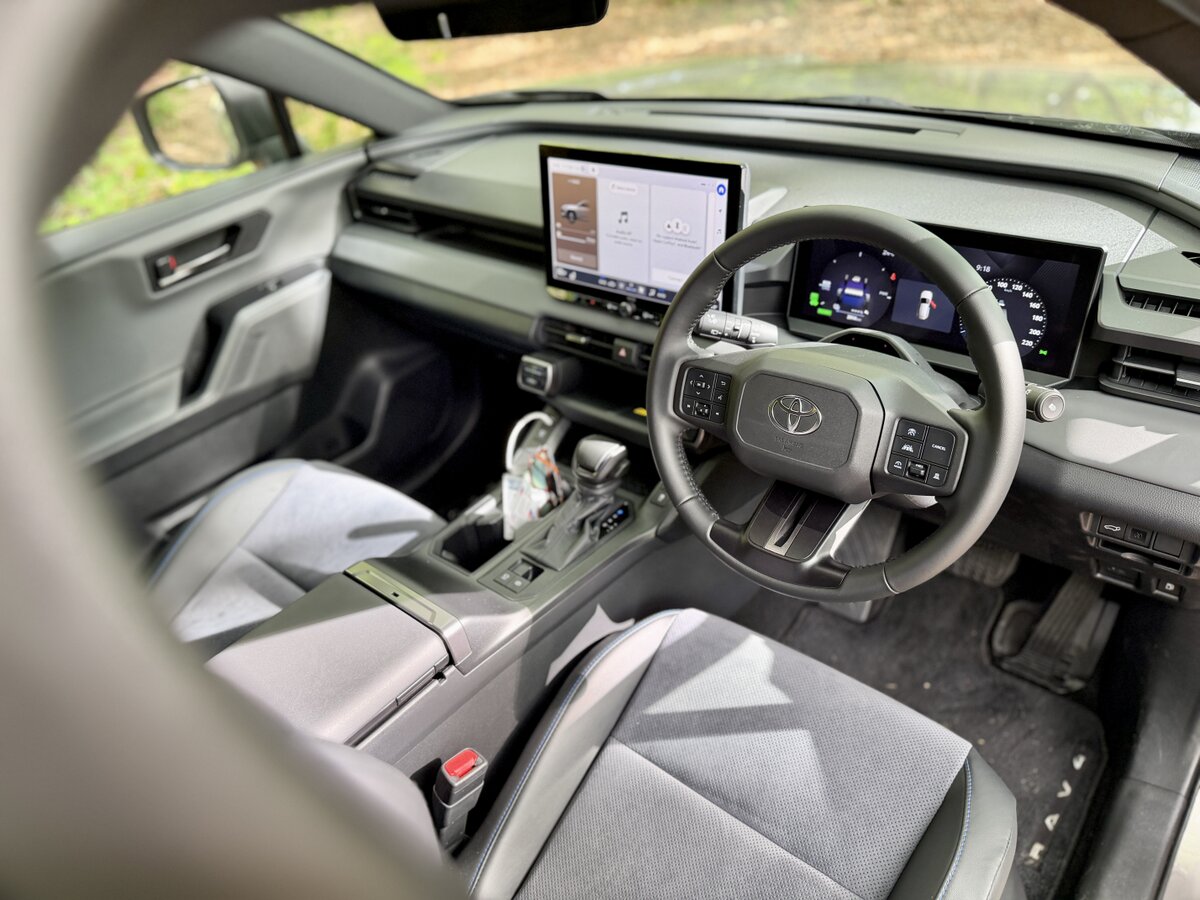
More interesting than a lot of Toyota interiors, but $64K's worth?
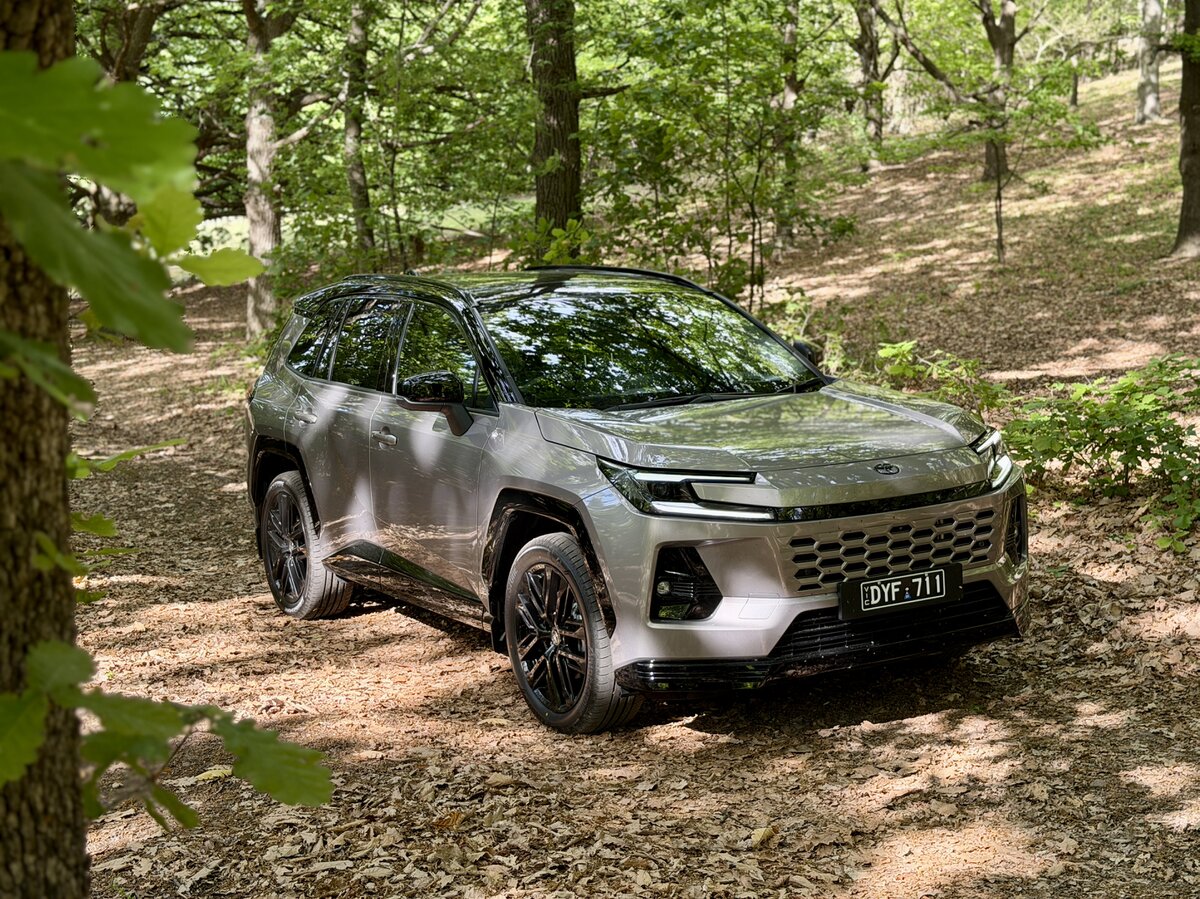
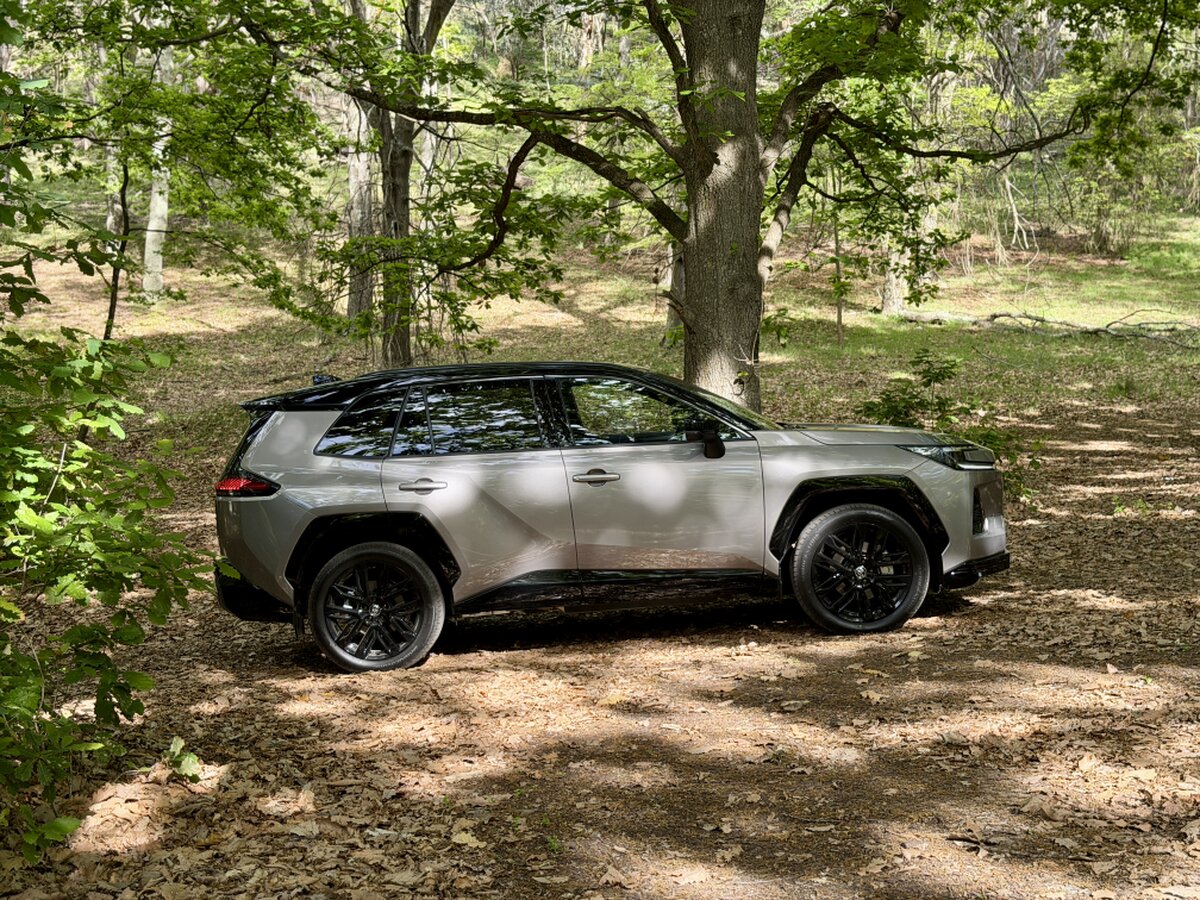
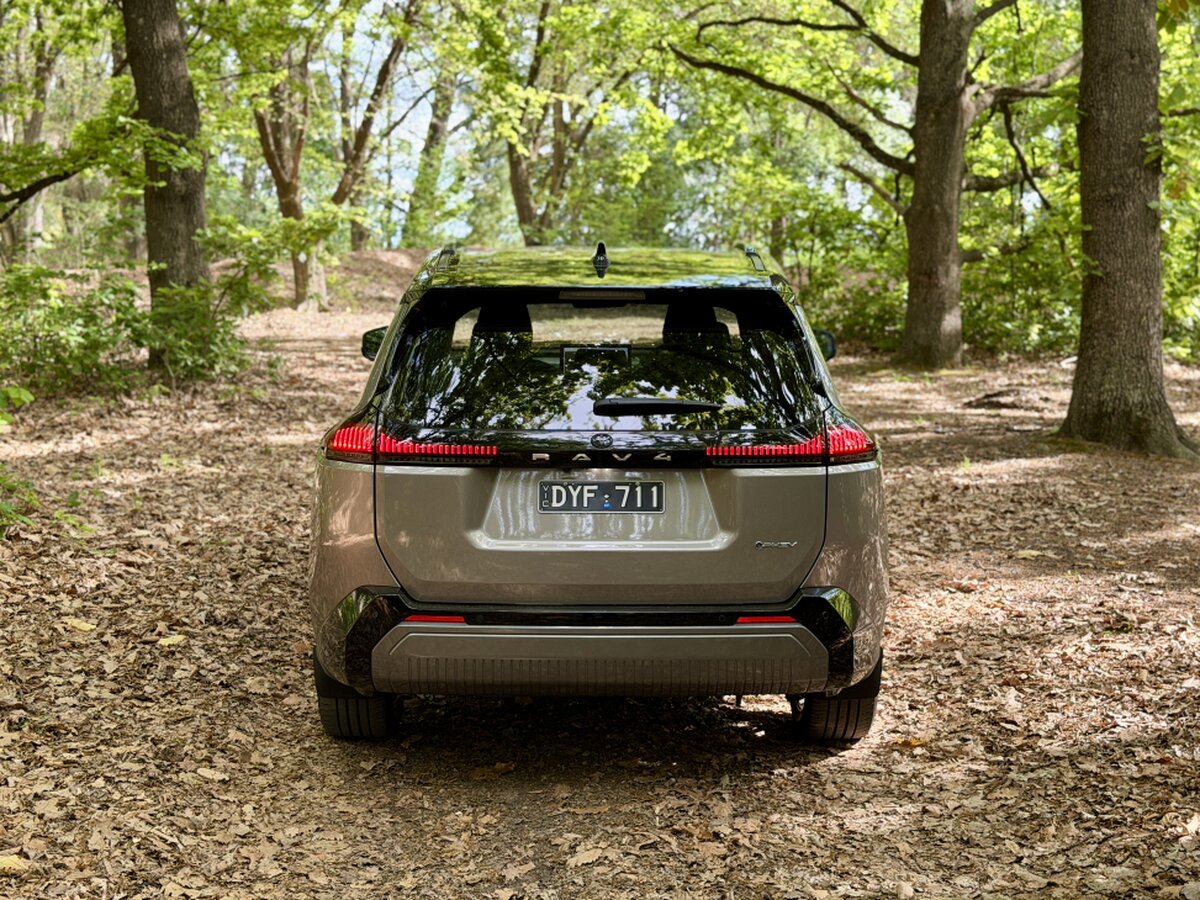
From the outside, you'd struggle to tell it apart from a regular hybrid RAV4, save for a PHEV badge on the tailgate and an extra flap on the front passenger-side guard for plugging it in.
Toyota says the battery can be charged from 10 to 80 per cent in around 20 minutes using a suitable DC fast charger, or in roughly six to eight hours from a household power point.
The interior is much the same, too, although you lose around 50 litres of boot space to accommodate all the extra electrickery underneath.
At least there's still a space-saver spare wheel, a first for a plug-in hybrid.
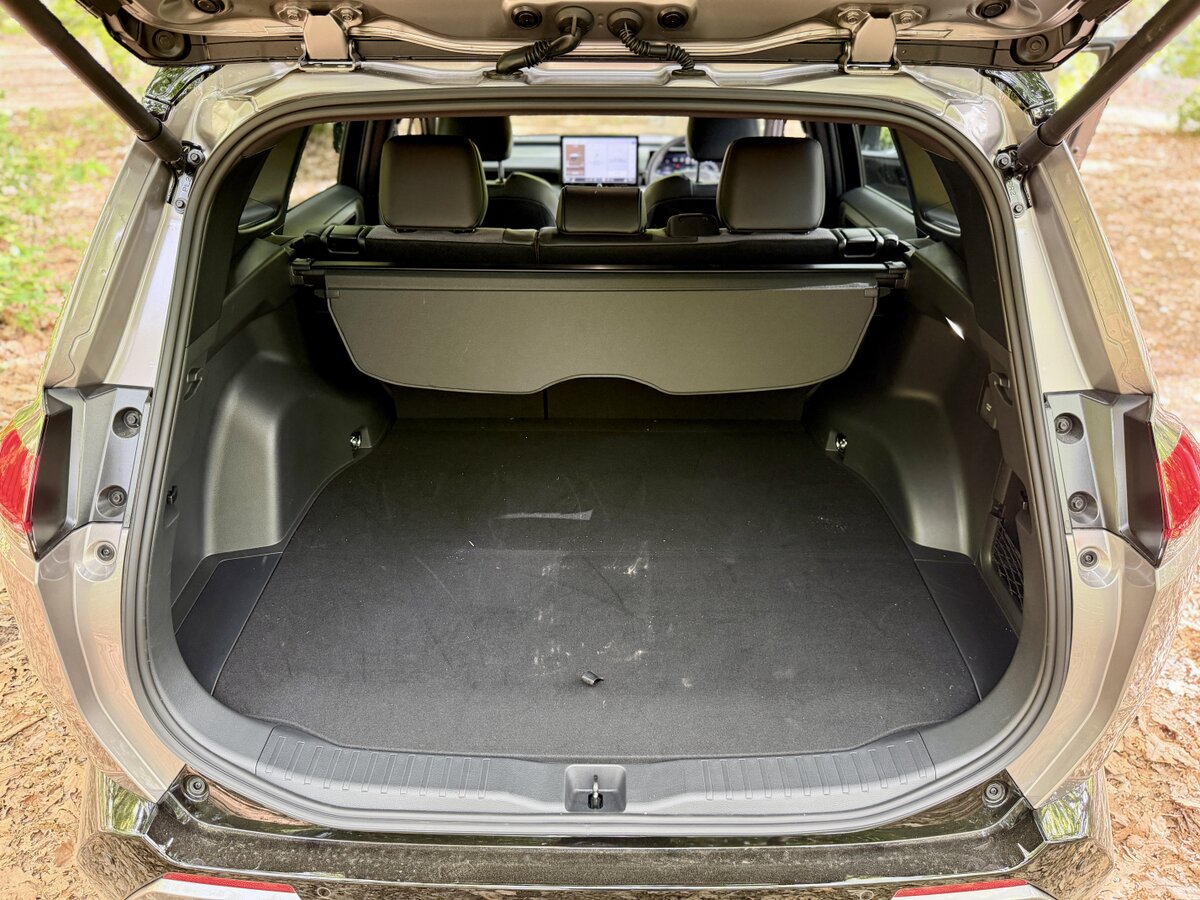
The boot floor sits a bit higher due to the battery - and space-saver spare - underneath.
What's it like to live with?
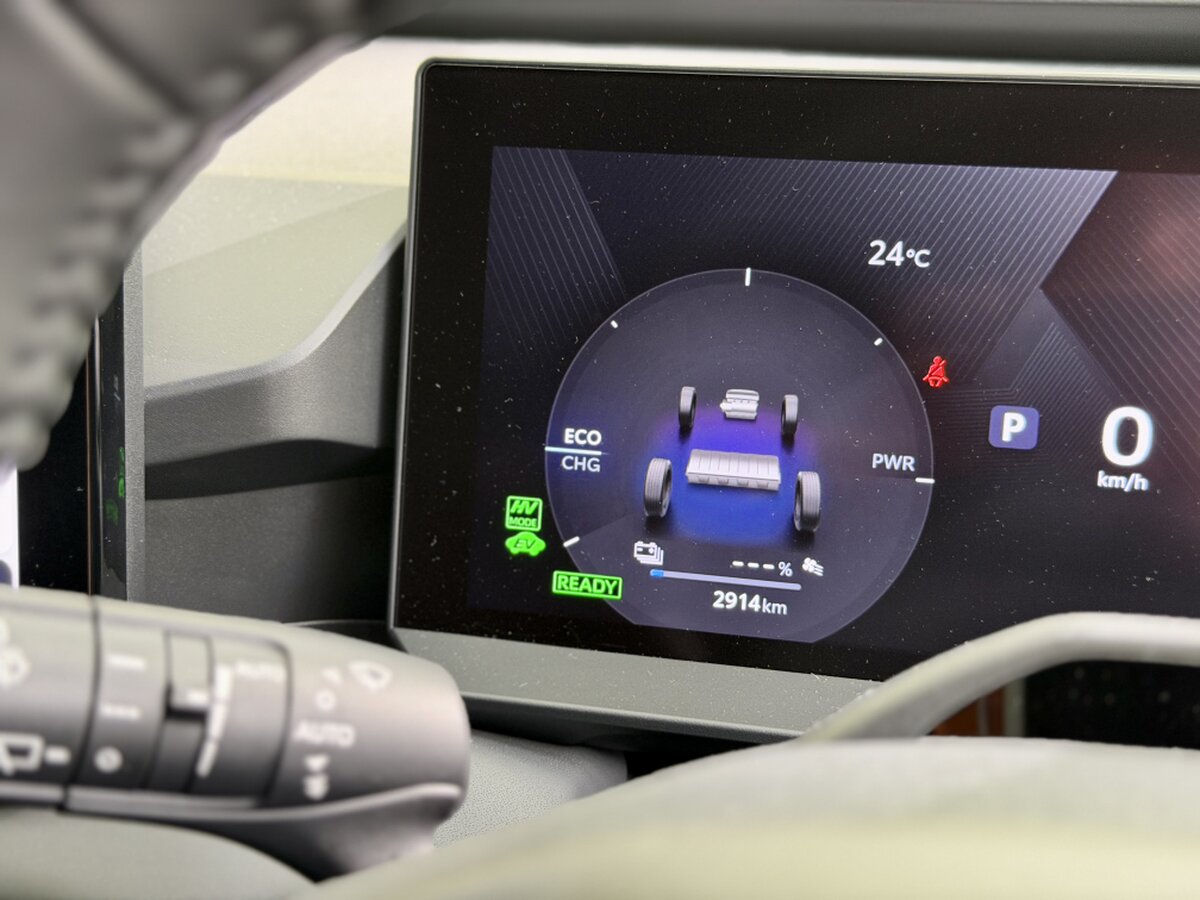
Toyota promises up to 113km of pure electric driving on the WLTP test cycle. And while Toyota has occasionally been guilty of looking at a glass with a puddle at the bottom and calling it half full, this time I'm inclined to believe it.
Once the battery is depleted, however, it's not quite so impressive. My run from Sydney to Canberra returned an average of 6.7L/100km. That's a highway figure, and in a standard hybrid RAV4 you'd expect something closer to 5L/100km.
I'll give the PHEV the benefit of the doubt, given the strong spring winds. And if you're doing most of your commuting on electricity, the occasional thirsty highway trip probably isn't going to mean Christmas is cancelled.
Swipe or scroll sideways · 7 images
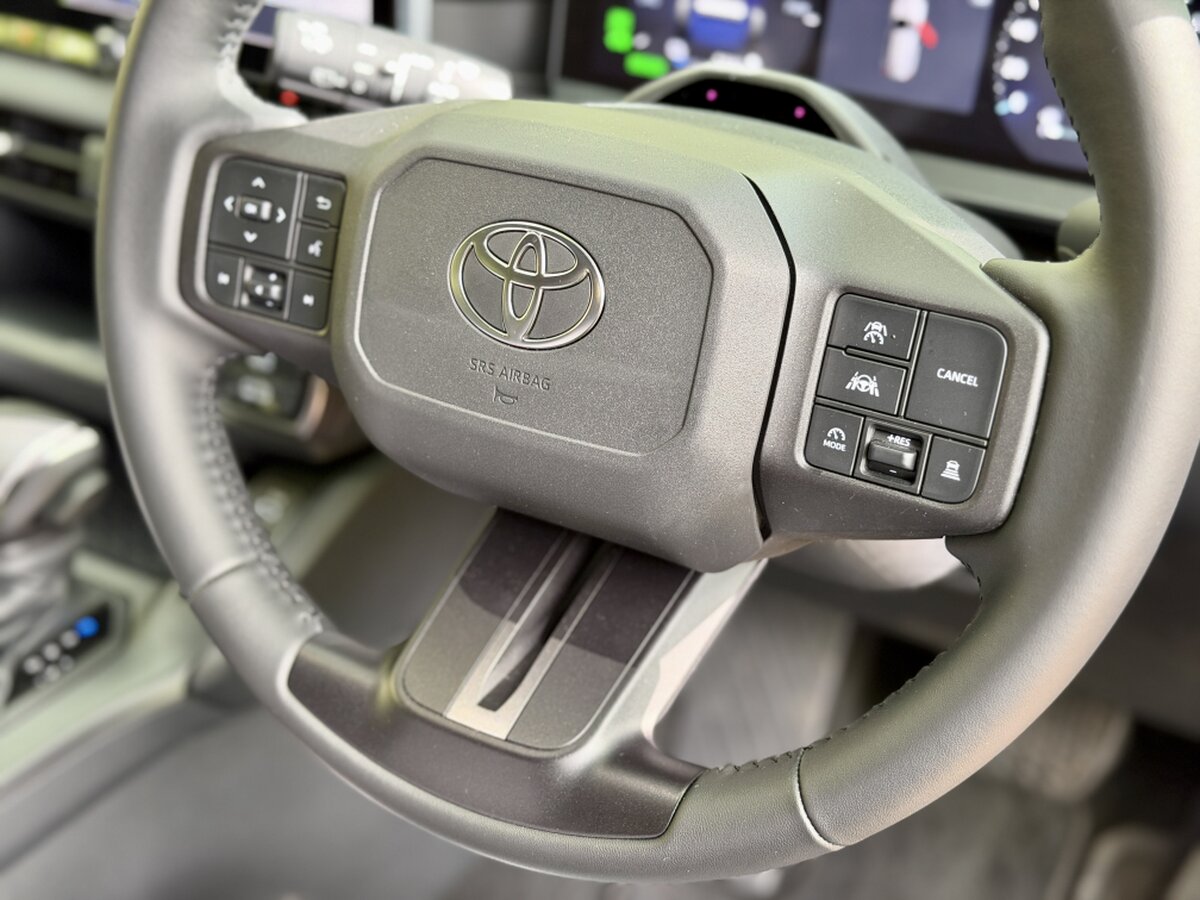
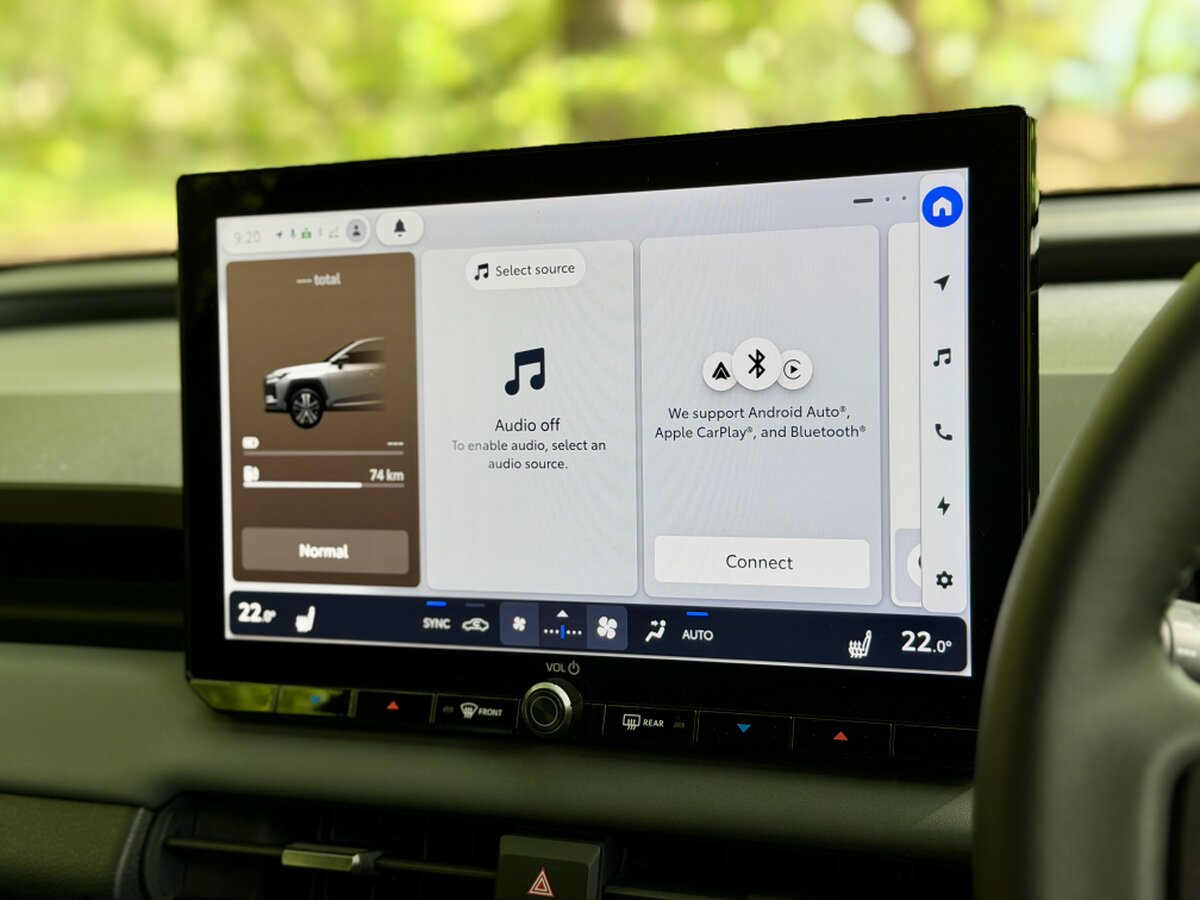
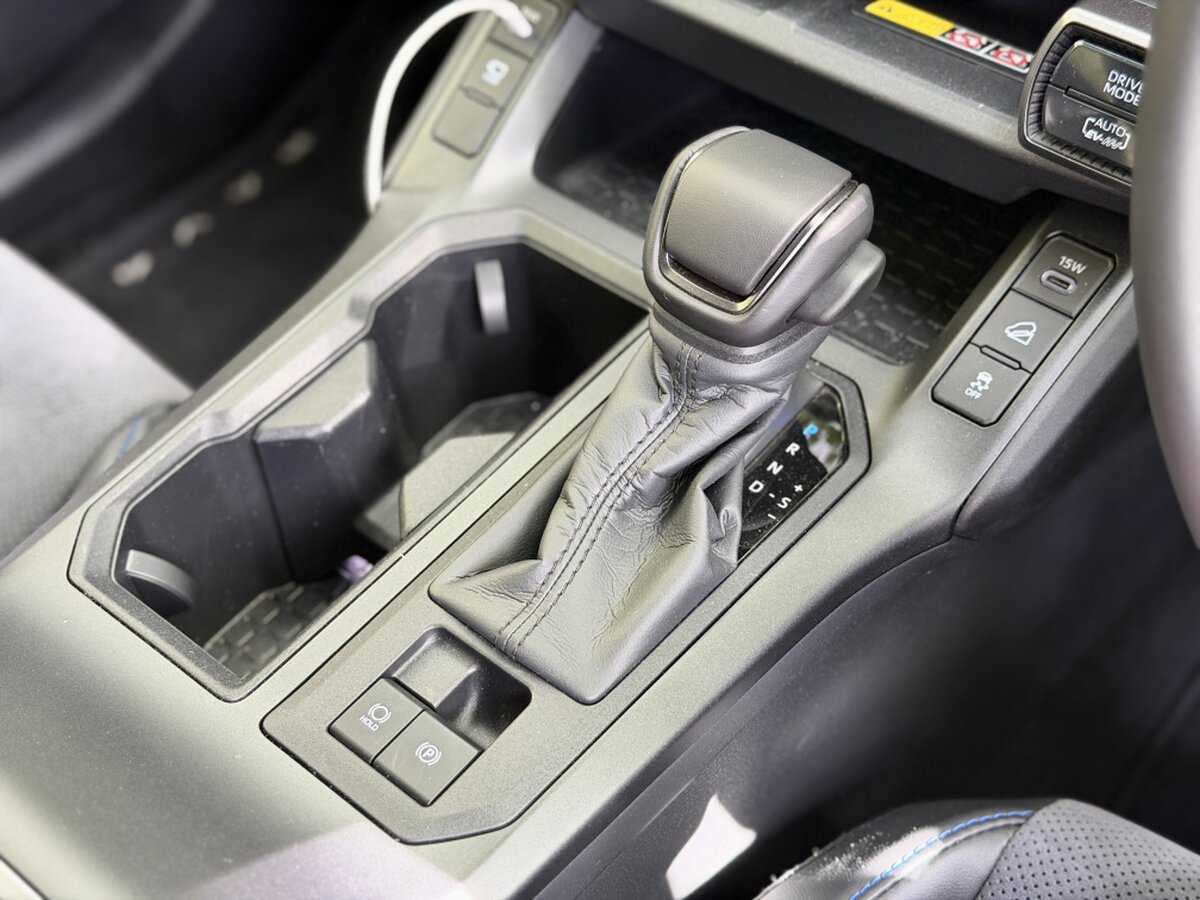
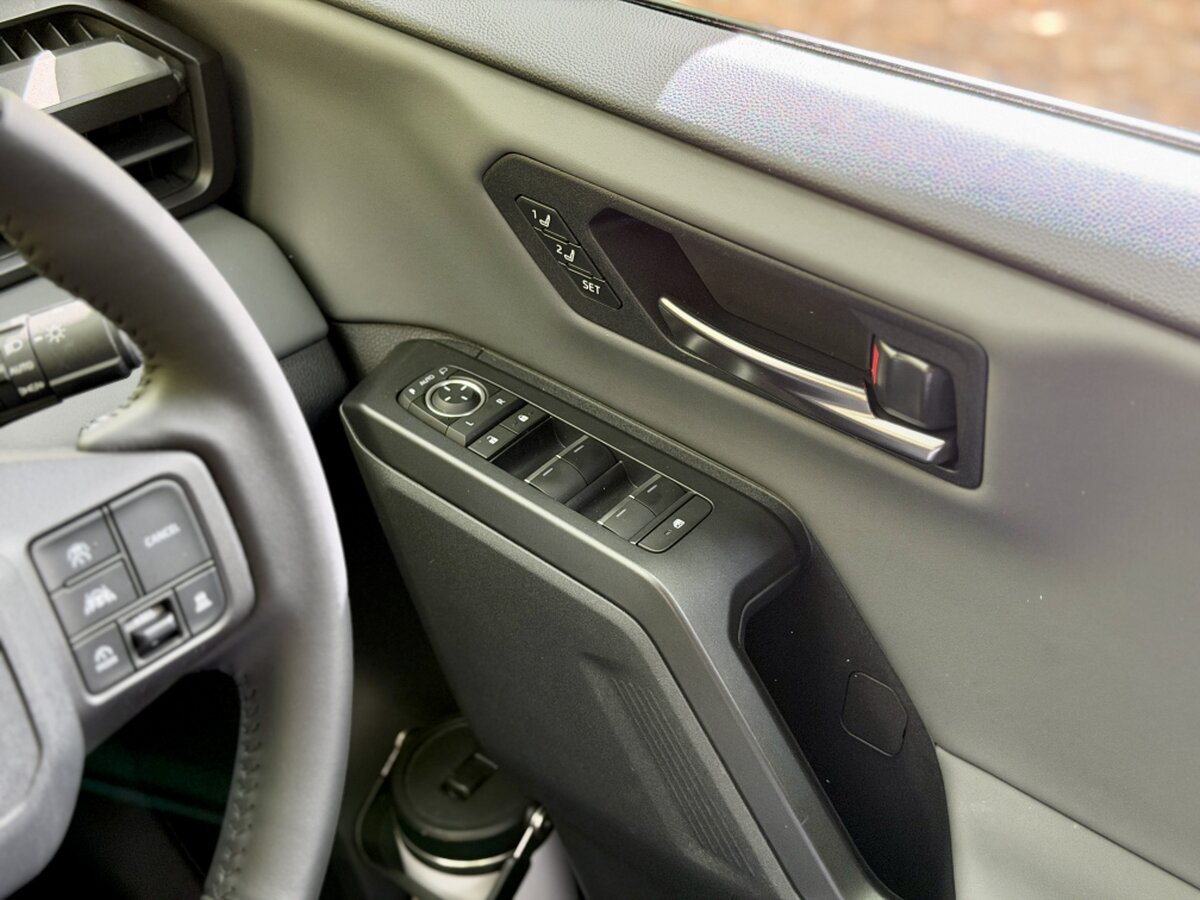
Inside, Toyota's new infotainment system is cleaner to look at and easier to use than its previous efforts, bu most of the important functions happily remain on good, old-fashioned physical buttons.
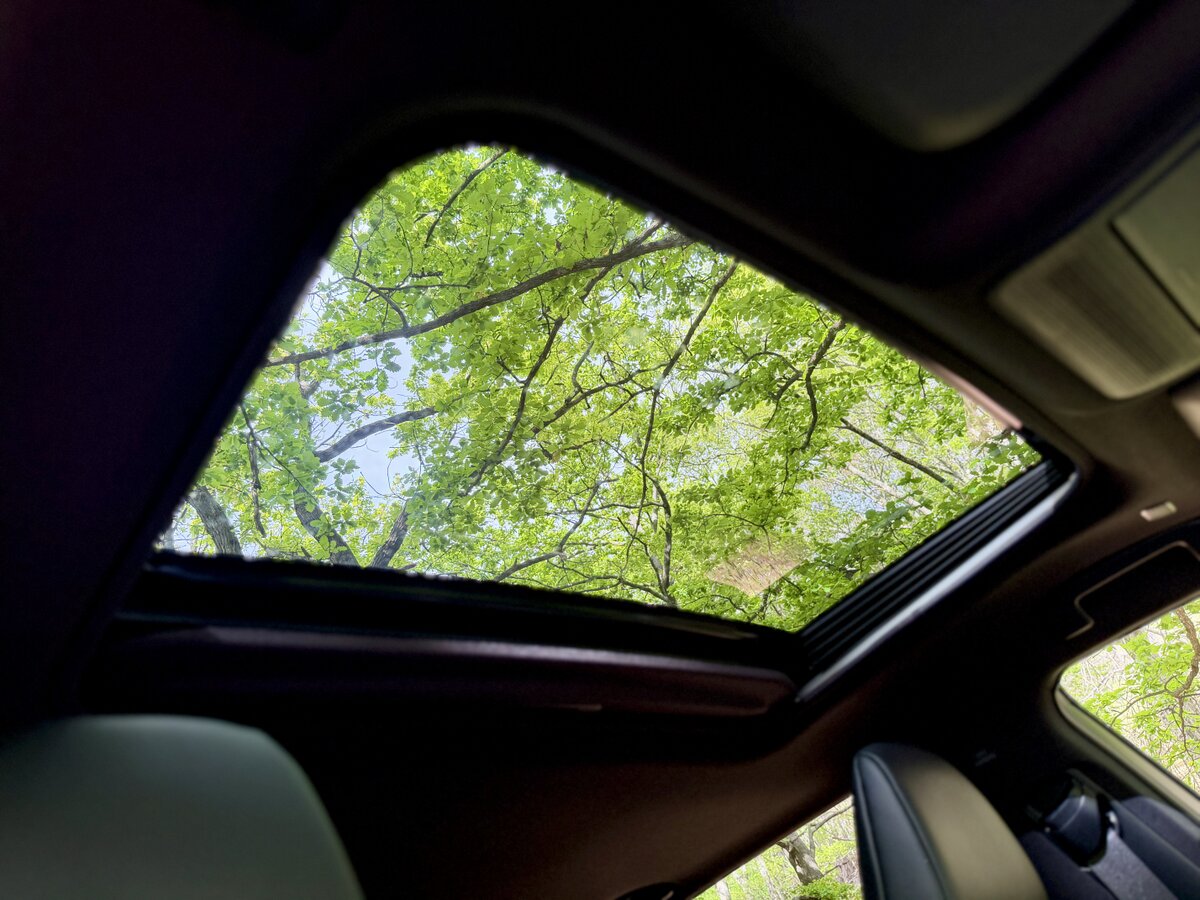
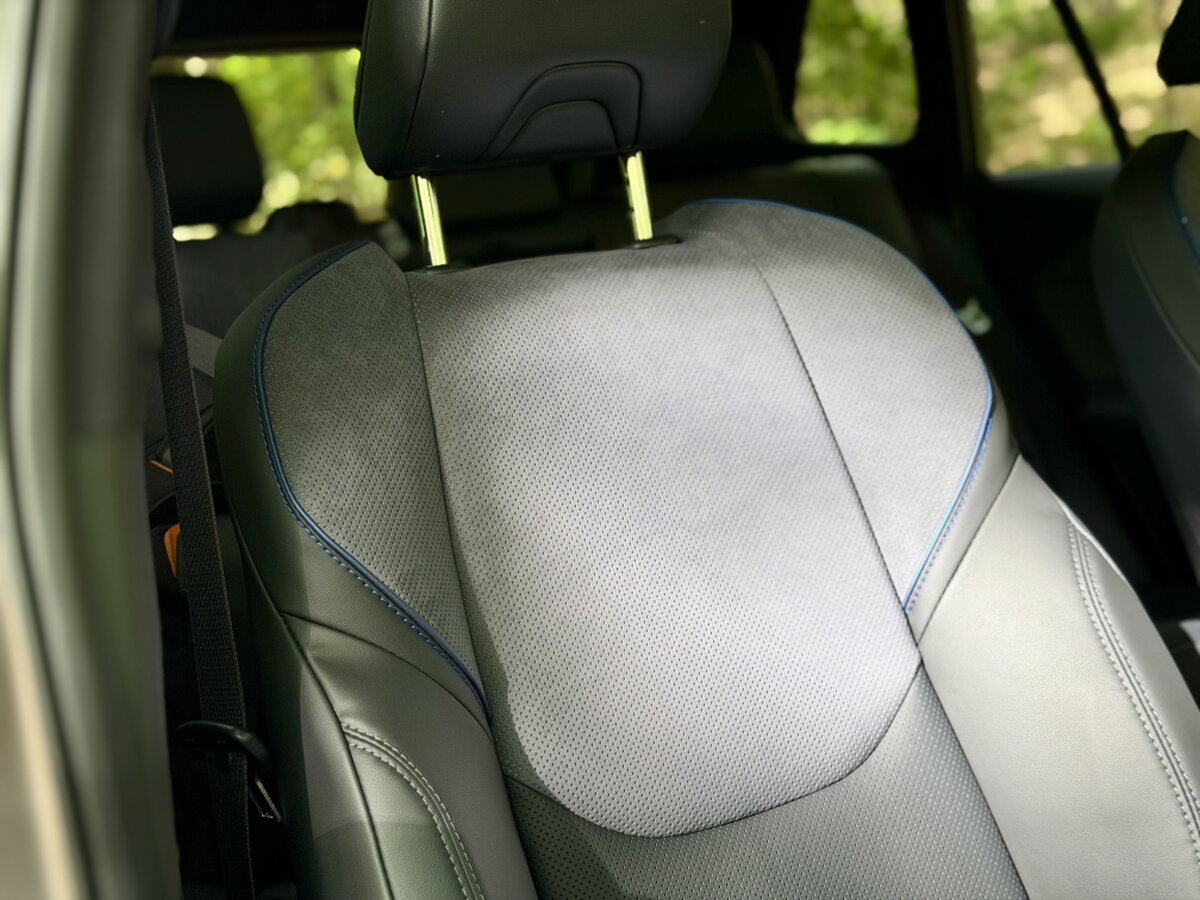
There's been some effort to dress up the cabin with unusual shapes and, in our XSE, blue piping on the leather seats. But it's still a Toyota. There's plenty of black, scratchy plastic, and not much in the way of luxury features beyond the heated seats and sunroof. Perfectly acceptable in something destined for a life of Ubering, but slightly demoralising in a car costing $64K.
But they've clearly spent the money getting the handling dynamics down pat. The way this thing steers, stops, rides and goes around corners is genuinely impressive. Everything feels smooth, predictable and nicely weighted, without the clunky awkwardness that often comes from blending regenerative brakes with traditional pads and steel.
And put it in Sport mode, and it's actually rather fun. Yes, a plug-in hybrid RAV4. Fun. I'm as surprised as you are.
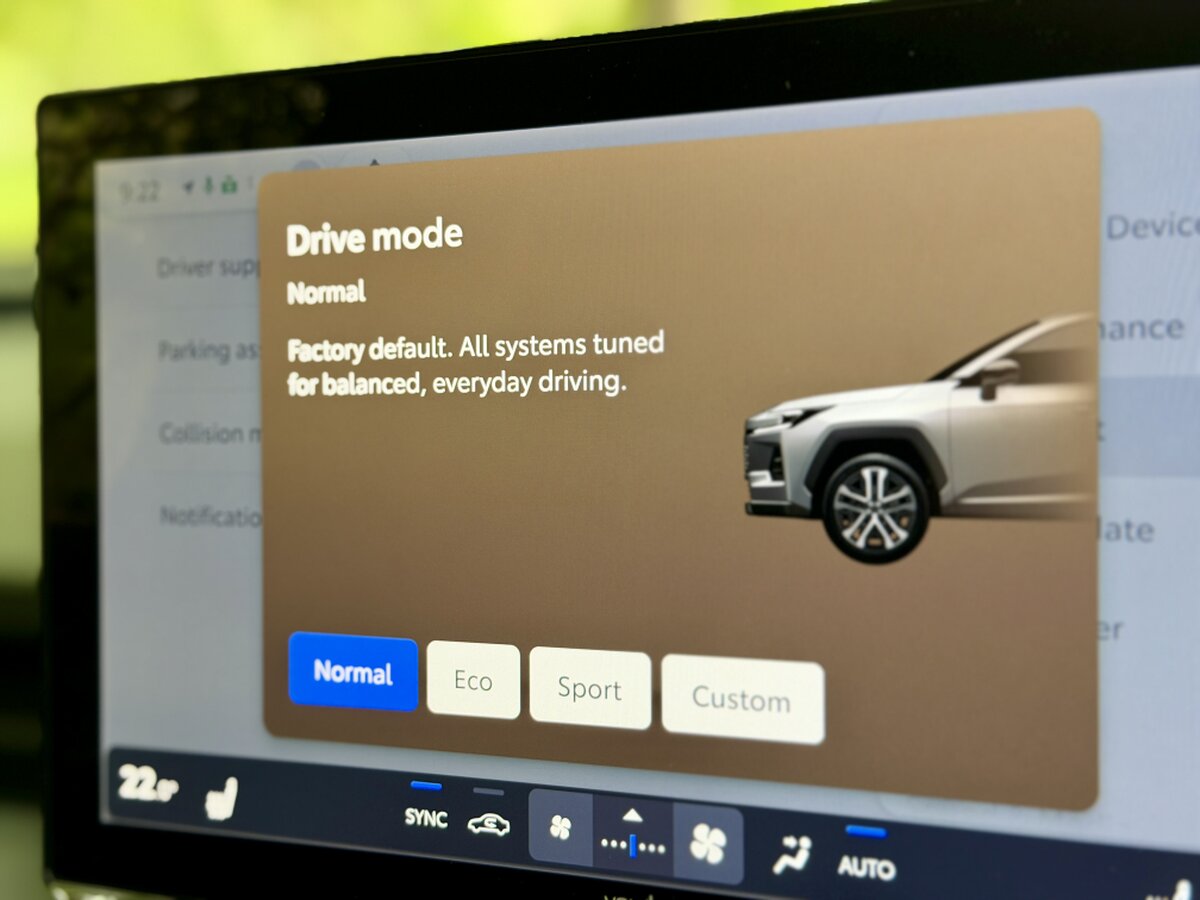
There are also modes for "Trail" and "Snow".
Should you buy one?
In the end, the most annoying thing about the RAV4 was the fact its boot feels the need to beep incessantly the whole time it's opening or closing. Like a reversing semi-trailer. It's stupid. And antisocial. To the point your neighbours will want to kill you before long.
But that's a RAV4 problem, rather than a PHEV problem.
As a plug-in hybrid, you'll save money day to day. But only after you've stumped up the not-considerable $64K to get it in the first place.
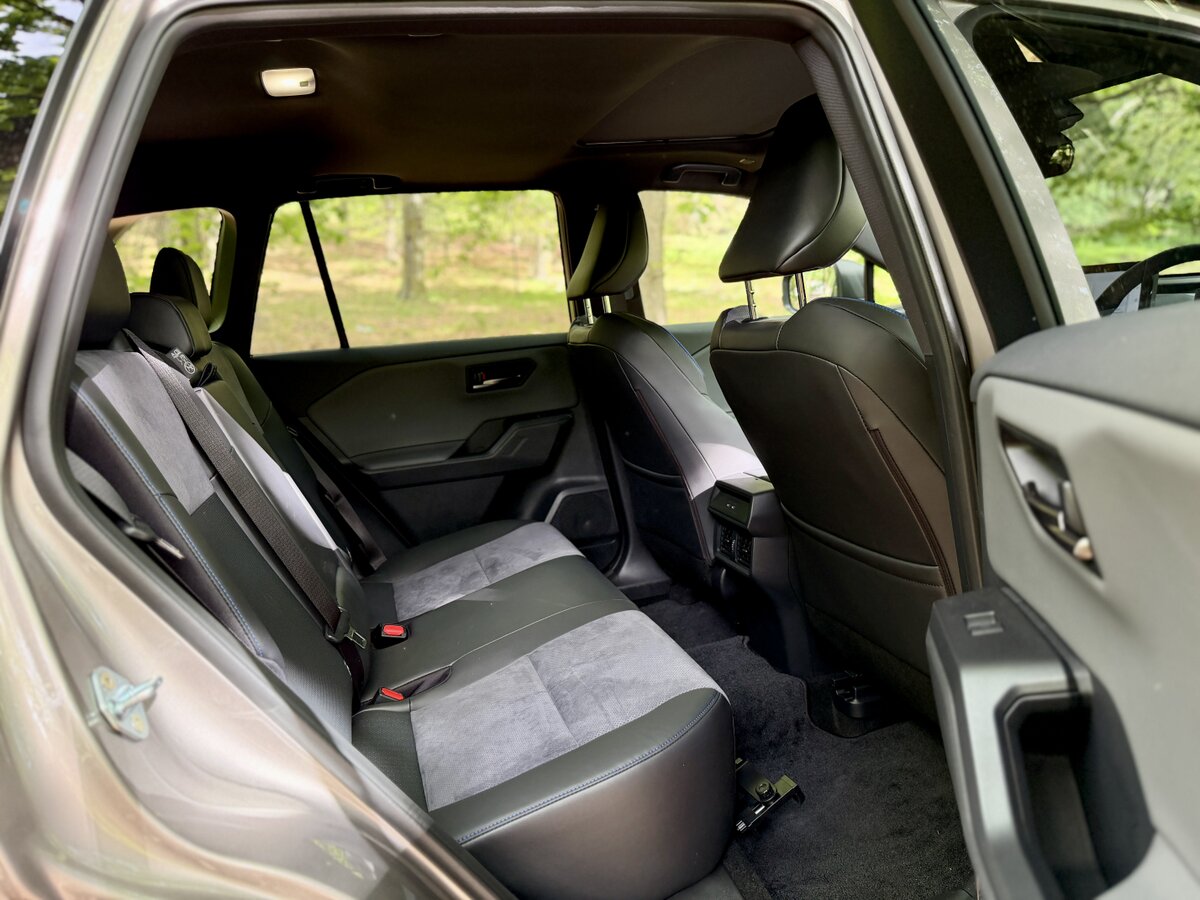
Heaps of space is a plus.
There are plenty of cheaper alternatives, including the Mitsubishi Outlander PHEV, which starts at $57,290, although the most expensive versions stretch beyond $70,000.
But this is where Toyota can afford to arrive late to the party. Because it knows you'll will buy its cars anyway. As will the person after you. The same isn't necessarily true of a newer Chinese PHEV once it's on the other side of its warranty.
And with a cheaper GXL version expected early next year, rumoured to start at a little over $50,000, the RAV4 PHEV could look even more tempting.
So Toyota might make one of the best PHEVs now too.
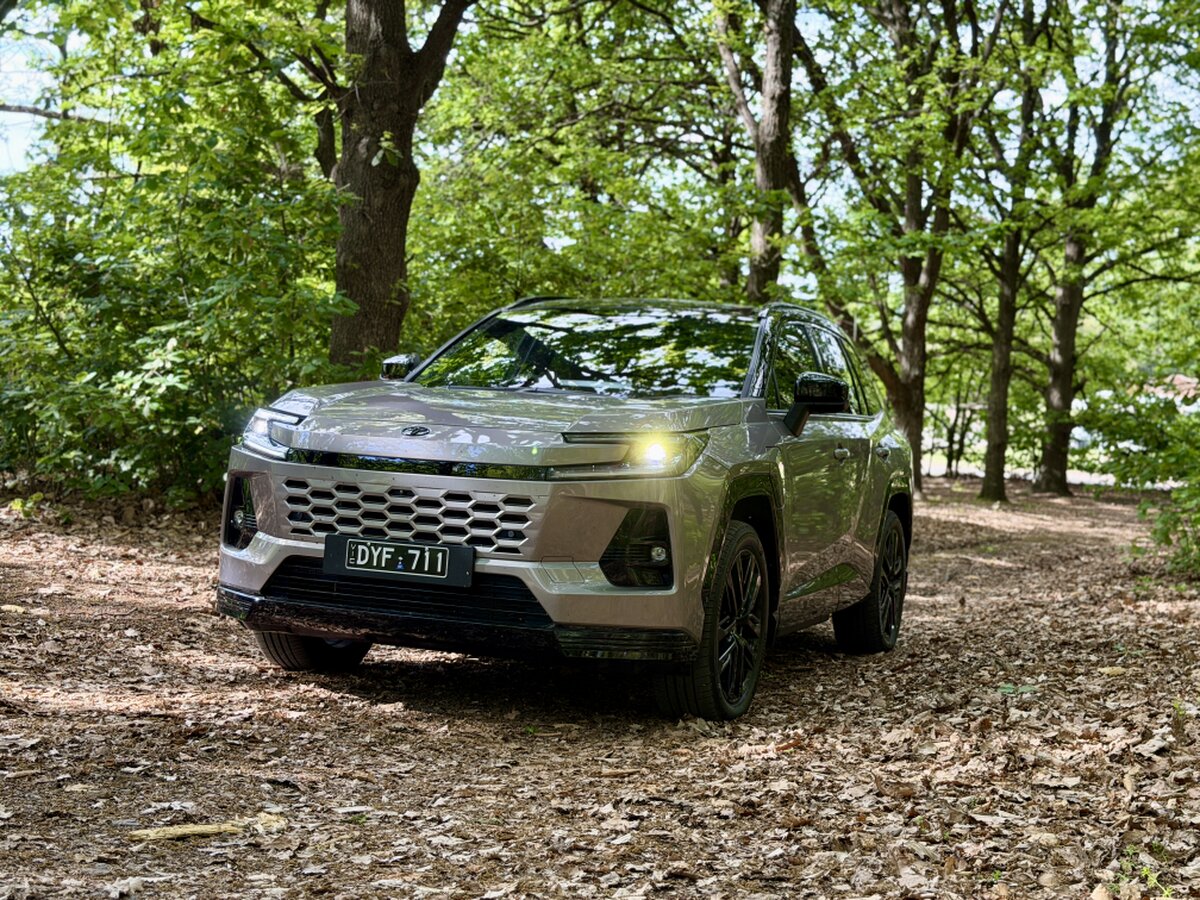
This, or a Mitsubishi Outlander PHEV?
At a glance
What we liked
Excellent handling
Up to 113km of claimed electric range
Improved infotainment system (but still with actual buttons)
What we didn't
Expensive
Mediocre interior plastics and equipment levels
Stupid beeping boot
Thanks to Toyota Australia for providing this car for testing. CARBIDS has no commercial arrangement with Toyota Australia.
|
|